Buy Here Pay Here vs. Bank Financing: Which Option Saves You More Money?
Posted Friday, Jul 03, 2026
Choosing the right financing option is one of the most important decisions you'll make when purchasing a used vehicle. Whether you're considering Buy Here Pay Here (BHPH) financing or a traditional bank auto loan, your choice can affect your monthly payments, total loan cost, interest rate, and overall financial flexibility. For buyers with excellent credit, limited credit history, or past credit challenges, understanding how each financing option works is essential before signing a loan agreement. This guide compares Buy Here Pay Here financing and bank financing, explains their key differences, and helps you determine which option may save you more money based on your budget, credit profile, and long-term financial goals.
1. How Do Buy Here Pay Here Dealerships Finance Used Vehicles?
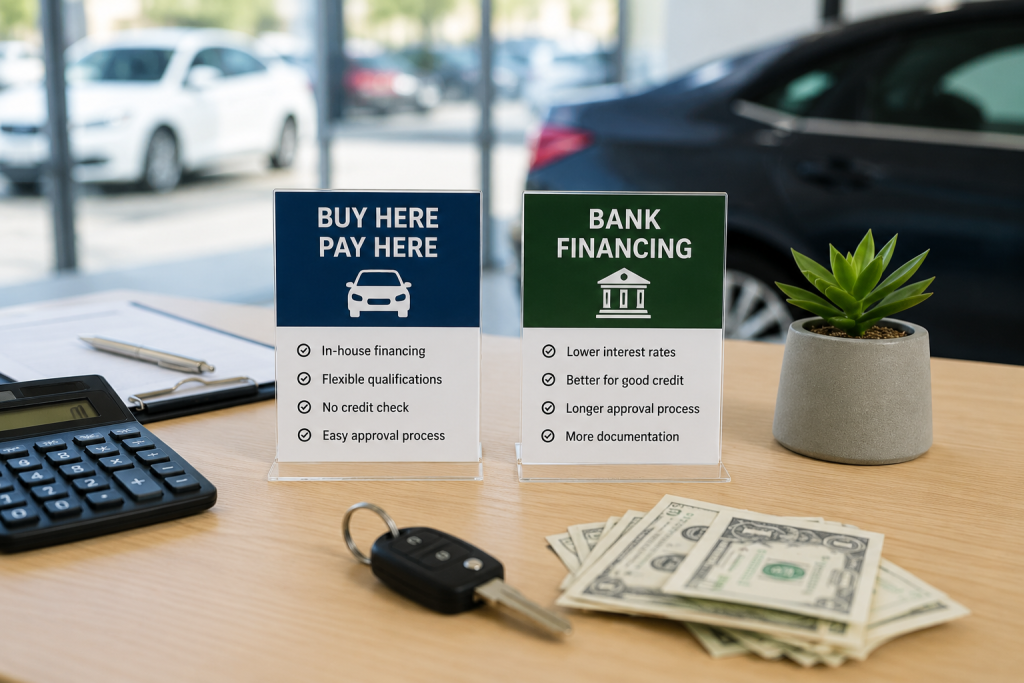
Buy here pay here dealerships (bhph) provide in-house financing, meaning the auto dealer is the lender. Instead of qualifying with a bank or credit union, buyers with bad credit or no credit can often buy a used car and make payments directly to the dealership. Pay here car lots often cater to buyers with poor credit by offering buy here pay here financing or pay here loan options that bypass traditional credit checks and credit bureaus.
Because the dealership assumes the credit risk, buy here pay here programs typically charge a higher interest rate and set higher monthly payments compared to traditional financing. However, these pay here financing options can be the fastest route to getting a car for buyers who can’t qualify for a bank auto loan or credit union loan. On-time payments can help rebuild your credit if the dealer reports to credit bureaus, but not all bhph dealerships report payments.
2. What are the cost components of a bank financing auto loan?
Bank financing for a car involves applying for an auto loan with a bank or credit union. The lender evaluates your credit score, income, and credit history to set the interest rate and loan term. Banks and credit unions generally offer the lowest interest rate for borrowers with excellent credit and can provide more flexible loan terms and lower monthly payments than pay here dealerships.
Costs include the principal amount, the interest rate (which varies by credit risk and market rates), fees, and sometimes early payoff penalties. Customers with good credit scores will typically secure a lower interest rate and lower overall cost on a traditional auto loan than with bhph financing, but those with bad credit may not qualify or may face higher-than-traditional interest rates even at banks.
3. Who pays less overall: buyers with good credit or buyers with bad credit?
Buyers with excellent credit usually pay less with traditional financing because lenders compete to offer the lowest interest rate and best terms through banks, credit unions, and other financing companies. A low interest rate lowers the total interest paid over the life of the car loan and reduces monthly payments, making traditional auto financing the cheapest option for qualified borrowers.
Buyers with bad credit or no credit often face higher interest rates or may not qualify for bank financing. For these buyers, buy here pay here dealerships or specialized lenders provide alternatives but usually at a higher cost. Paying more in interest and facing stricter repossession policies can make bhph loans more expensive despite easier qualification.
4. Does Buy Here Pay Here Financing Help Improve Your Credit Score?
Rebuilding your credit depends on whether the lender reports payments to the credit bureaus. Some buy here pay here dealerships report on-time payments, which can improve your credit score over time and help you qualify for better rates later. A pay here loan that reports to credit bureaus can be a financing option for buyers with poor credit to rebuild their credit history with consistent on-time payments.
Traditional financing typically reports to the bureaus by default. If you qualify for a bank or credit union auto loan, on-time payments will likely improve your credit score faster and more reliably than many pay here car lots. Always ask the dealership whether they report to credit bureaus before committing to a buy here pay here program.
5. How do interest rates compare between pay here dealerships and banks?
Interest rates at pay here dealerships are generally higher than rates from banks or credit unions because the dealership takes on greater risk for buyers with low credit scores. Buy here pay here financing often features higher interest rate or higher interest relative to traditional loans, which increases the total cost of financing and monthly payment amounts.
Banks and credit unions offer the lowest interest rates for borrowers with good to excellent credit. Lenders typically offer better rates through traditional financing channels, and even buyers with fair credit may find lower rates at a credit union than at a bhph dealership. Shopping multiple lenders helps secure the lowest interest rate available for your credit profile.
6. What are the hidden costs and risks of buy here pay here financing?
Buy here pay here dealerships can include hidden costs such as higher fees, penalties for missed payments, and swift repossession policies. Because the dealership holds the title, repossession can be faster for missed payments, and recovering a down payment may be difficult. These risks make buy here pay here financing a more expensive financing option if payments aren’t maintained.
Other risks include limited vehicle selection, potentially higher maintenance issues with some used cars, and inconsistent reporting to credit bureaus. Buyers should ask about warranties, repo policies, and whether the buy here pay here dealership reports payments to credit bureaus to understand the full financial impact of choosing bhph financing.
7. How do monthly payments differ between an auto loan from a bank and a pay here loan?
Monthly payments for a bank auto loan are typically lower for the same loan amount because the interest rate is lower. Longer loan terms at banks or credit unions can also reduce monthly payments, although they may increase total interest paid. A traditional loan is often the best option to minimize monthly payments while keeping interest costs reasonable.
Pay here loans often come with higher interest and shorter terms, which can increase monthly payments. Additionally, bhph dealerships may require larger down payments or frequent payment schedules (weekly or biweekly) that affect cash flow. Evaluate both monthly payment and total cost when comparing financing options to determine what’s truly cheaper for your budget.
8. Can you negotiate better terms at a dealership or with a bank?
You can negotiate with both dealerships and banks, but bargaining power varies. At a dealership, you might negotiate the price of the used car, down payment, and aspects of the in-house financing terms. Buy here pay here dealerships sometimes set firm rates for buyers with credit challenges, but you can still negotiate price, fees, and whether payments are reported to credit bureaus.
With banks and credit unions, you can shop multiple lenders and leverage offers to negotiate a better rate. Credit unions often give competitive rates for members and may be more willing to work with buyers to structure an affordable car loan. Pre-approval from a bank or credit union gives you more bargaining power at the dealership and may result in a lower interest rate or monthly payment.
9. What financing option is best for buyers with poor credit or no credit?
For buyers with poor credit, buy here pay here financing can provide immediate access to a used car when bank financing is unavailable. Pay here car lots and bhph dealerships cater to buyers with credit challenges by offering in-house financing without strict credit checks. This access can be essential if you need a car quickly and can afford the higher interest and potential risks.

However, if you can wait, consider rebuilding credit and exploring traditional financing with a credit union or subprime lenders who may offer better terms than bhph. Working on improving your credit score through secured credit cards, on-time payments, and correcting credit history errors can lead to lower interest rates and cheaper financing options over time.
10. How should you compare overall cost to decide what’s actually cheaper?
To determine which financing option is cheaper, calculate the total cost of the loan: principal + total interest + fees + potential penalties. Compare monthly payment amounts and total interest over the loan term for both buy here pay here and bank financing. Use online calculators to model different interest rates, loan terms, and down payments to see actual cost differences.
Also consider non-financial factors like credit reporting, repossession risk, and vehicle reliability. Cheaper financing on paper might carry higher risk of repossession or limited reporting to credit bureaus, which affects your ability to secure better rates later. Evaluate long-term cost and credit impact, not just the immediate monthly payment.
11. What steps can help you secure the lowest interest rate when financing a used car?
Improve your credit score before you finance if possible: pay down existing debt, make on-time payments, and fix credit report errors. Shop multiple lenders including banks, credit unions, and financing companies to compare rates and get pre-approved. Pre-approval from a bank or credit union gives leverage at the dealership and helps you avoid higher-than-traditional interest rates from in-house financing.
Consider a larger down payment to lower your loan-to-value ratio, choose a shorter loan term if affordable, and ask about rate discounts for automatic payments or existing relationships with a lender. These steps increase your chances of securing the lowest interest rate and reduce the total cost of the car loan.
Conclusion: Key takeaways on buy here pay here vs. bank financing
- Buy here pay here financing (bhph) offers quicker access for buyers with poor credit but usually carries higher interest rates and higher monthly payments.
- Bank financing and credit unions typically provide the lowest interest rate and overall cost for buyers with good to excellent credit.
- Compare total loan cost (principal + interest + fees), not just monthly payments, to determine what’s actually cheaper.
- Ask whether payments will be reported to credit bureaus—on-time payments can help rebuild your credit.
- Shop multiple lenders, consider pre-approval, and negotiate price and terms at the dealership to get the best financing option.
If you’re in the Raleigh, NC area and researching your options, visit Xride Cars, a Used Car Dealer in Raleigh, NC, to discuss financing and ask about in-house financing, bank financing, credit union options, and buy here pay here programs. Whether you need help with poor credit, want to rebuild your credit score, or are simply comparing interest rates and monthly payment scenarios, a reputable dealership can outline car loan choices and help you secure a financing option that fits your budget. Remember: financing, dealership, credit score, buy here pay, interest rate, auto loan, credit union, poor credit, pay here car lots, used car dealer—making informed decisions and on-time payments can help you get a better deal over time.