Car Maintenance Tips for Keeping Your Used Vehicle Running
Posted Tuesday, Apr 07, 2026
Buying a used car can save money up front, but proper car maintenance is essential to prevent costly repairs and extend the life of your vehicle. This guide with car maintenance tips for your used vehicle covers essential maintenance tips, routine maintenance tasks, and inspection steps that every car owner should follow to keep your car running like new and protect its resale value.
How often should I follow a maintenance schedule for my used vehicle?
Regular maintenance and scheduled maintenance are the backbone of good car ownership. Review the owner’s manual for service intervals like oil changes, transmission fluid checks, and coolant inspections. Staying on top of a maintenance schedule will help prevent major repairs and costly ones down the road.
Creating a routine maintenance checklist for regular oil changes, brake checks, and tire maintenance helps ensure the vehicle maintains fuel efficiency and vehicle performance. Even if you purchase a pre-owned vehicle, scheduled maintenance and regular service center visits will keep your car running and help maintain resale value.
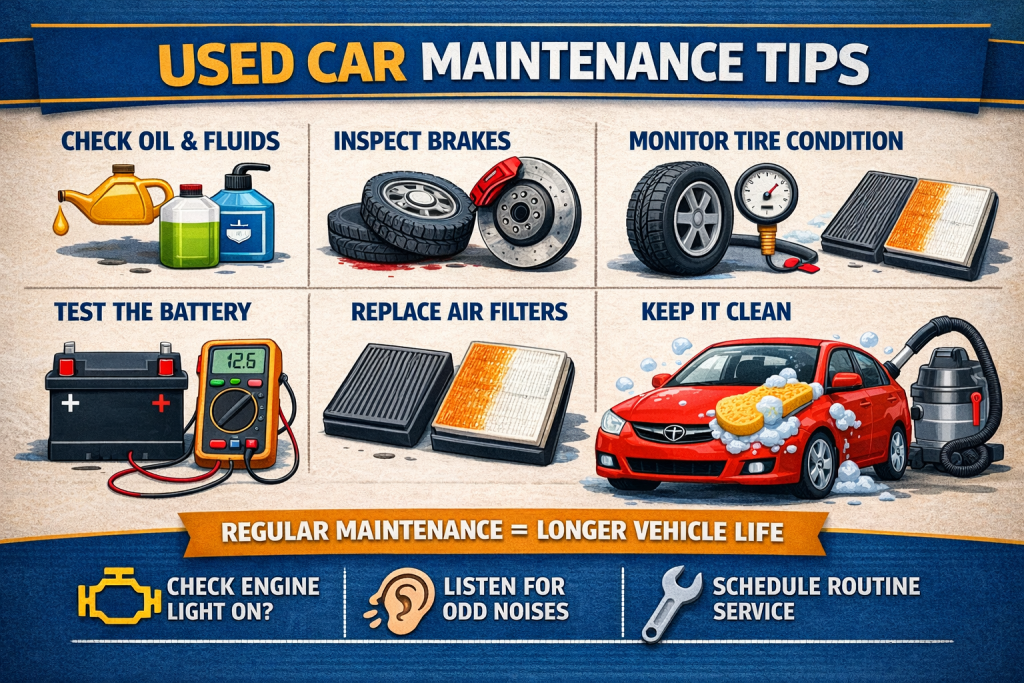
What are the most important oil change guidelines for my used car?
Regular oil changes are one of the most critical car maintenance tips to keep your vehicle healthy. Engine oil lubricates moving parts, reduces wear and tear, and helps prevent overheating. Follow the car’s recommended interval for oil type and change frequency; many modern vehicles require synthetic oil and longer intervals, while older used cars may need more frequent changes.
Check the oil level and color between services—low or dark engine oil can indicate leaks or internal engine wear. If you notice grinding or unusual noise, schedule a service center appointment right away. Staying current with regular oil changes can help prevent major repair bills and keep your car performing reliably.
How can I inspect and maintain tires to help prevent uneven wear?
Tire maintenance is essential for safety, fuel efficiency, and extending tire life. Regularly check tire pressure with a gauge, inspect tread depth for uneven wear, and look for signs of bulges or punctures. Proper tire pressure improves fuel efficiency and reduces wear on suspension and steering components.
Rotate tires according to the maintenance schedule and replace tires when the tread depth is low. Use a simple tread depth gauge or the penny test to check wear. If you detect uneven wear patterns, have a mechanic inspect wheel alignment and suspension to avoid costly repairs and ensure stable vehicle performance.
What brake maintenance should I perform on a used vehicle to avoid problems?
Brake maintenance is crucial to safety and preventing expensive repairs. Check brake fluid levels, inspect brake pads for thickness, and listen for sounds like squeak or grind when braking. A soft brake pedal, vibration, or brake warning light is a sign to schedule an appointment with your service center immediately.
Replace brake pads and brake fluid at recommended intervals and address corrosion on brake components. Regular brake maintenance keeps the car safe, extends the life of rotors and calipers, and helps keep repair costs from escalating into major repair projects.
How often should I inspect fluids and filters in my used vehicle?
Inspecting fluid level and filters is part of comprehensive vehicle maintenance. Check coolant, transmission fluid, power steering fluid, and windshield washer fluid regularly. Proper fluid levels help prevent overheating, transmission problems, and steering issues. If fluids appear dirty or low, top off or replace per the owner’s manual.
Air filters and fuel filters should be inspected and replaced as needed to maintain fuel efficiency and engine performance. Clogged filters can reduce power and increase fuel consumption, so make filter checks a regular part of your maintenance tasks to keep your vehicle running smoothly.
What should I look for when inspecting the battery and electrical system?
Car battery care is important for reliable starting and preventing roadside issues. Inspect the battery terminals for corrosion, ensure cables are tight, and check battery voltage during routine maintenance. If your used car shows slow cranking or electrical warning lights, have the battery and charging system tested.
Replace batteries that are old or fail tests, and monitor accessories like lights and wipers to ensure they are working properly. Maintaining the electrical system helps avoid being stranded and prevents small electrical issues from turning into bigger car repair jobs.
How can I prevent rust and corrosion on a used vehicle?
Rust and corrosion shorten the life of many components and reduce resale value. Regular washing, especially underneath the car and in wheel wells, removes salt and debris that cause corrosion. Waxing and using rust-proofing treatments can help protect vulnerable areas.
Inspect the undercarriage, door sills, and around the windshield for early signs of rust and address them quickly. Small surface rust can often be treated before it becomes a major repair. Keeping your vehicle clean and checking for corrosion helps keep your used car in top condition and preserves its value.
When should I replace spark plugs, belts, and hoses on my used vehicle?
Belts and hoses experience wear and tear and should be inspected during routine maintenance. Cracked belts, soft hoses, or oil-soaked components can cause engine damage or breakdowns. Spark plugs affect engine efficiency and fuel economy; replace them according to the maintenance schedule to ensure smooth combustion and performance.
Look for signs like rough idling, reduced fuel efficiency, or warning light indications that could point to failing spark plugs or a slipping belt. Proactive replacement reduces the likelihood of sudden failures and expensive repairs that timely maintenance and inspection could have prevented.
How do I handle warning lights and unusual noises in my used vehicle?
Warning light indicators are your car’s way of telling you maintenance isn’t optional. Never ignore a check engine light, brake light, or transmission warning. Use an OBD-II scanner or visit a mechanic to diagnose issues early and avoid major repair bills. Prompt attention to warning lights helps keep your vehicle running and prevents more severe damage.
Unusual noises like a grind when braking, a squeak from belts, or a thumping tire sound should trigger an inspection. These symptoms often point to worn brake pads, loose belts, or tire problems. Addressing these issues early through maintenance and repairs keeps the vehicle safe and reduces long-term costs.
What routine maintenance can help extend the life and resale value of my used vehicle?
Combining routine maintenance tasks—regular oil changes, brake maintenance, tire rotations, and fluid checks—will help extend the life of your vehicle. Keep a maintenance log with dates and work performed; this documentation is valuable when showing that a well-maintained car is available for resale.
Scheduled maintenance not only helps keep your car running like new but also improves your chances when selling or trading in your vehicle. Buyers look for a well-maintained car with service records, which can increase resale value and make the process with used car dealers or a used car dealership smoother.

How should I choose a service center or mechanic for my used vehicle?
Selecting the right service center impacts the quality of maintenance and repairs. Look for certified mechanics, read reviews, and verify that the shop performs scheduled maintenance according to the manufacturer's recommendations. A reputable service center can provide maintenance services and inspections, and help prevent major repair issues.
Ask about warranties on repairs, parts used (OEM vs. aftermarket), and whether the shop will follow the owner’s manual service intervals. Building a relationship with a trustworthy mechanic ensures your car receives proper care and keeps costly repairs at bay.
What are quick maintenance tips to keep your car running during service visits?
Simple checks by the car owner can help keep your used vehicle road-ready: verify tire pressure monthly, top off windshield washer fluid, inspect lights, and monitor fluid levels. These small steps help prevent minor issues from becoming big problems and maintain vehicle performance and safety.
Keep an emergency kit, monitor fuel efficiency for sudden drops, and schedule an appointment for any unusual symptoms. These routine habits are essential car care practices that help keep your car running and avoid unexpected breakdowns or expensive repairs.
Can following these car maintenance tips help when buying a used car?
Yes, when you know the basics of maintenance and repair, it helps when you purchase a used vehicle. Use this guide to ask sellers about maintenance history, recent repairs, and service records. A car with documented regular maintenance is less likely to have hidden issues and more likely to perform well after purchase.
When buying a used car, ensure that the owner has maintained major items like brakes, tires, belts, and fluids. Consider a pre-purchase inspection from a trusted mechanic or service center to identify potential costly repairs. These steps protect your investment and help keep your used car running for years.
Summary and final tips
This guide with car maintenance tips for your used vehicle emphasizes the importance of regular oil changes, tire maintenance, brake maintenance, fluid checks, and timely repairs. Following a maintenance schedule and paying attention to warning lights, unusual noises, and routine inspections will help prevent expensive repairs, extend the life of your vehicle, and keep your car performing reliably.
For buyers researching pre-owned vehicles, working with reputable service centers and maintaining detailed service records can improve vehicle performance, protect resale value, and make maintenance and repairs predictable rather than costly surprises. Proper maintenance isn’t optional—it’s essential for every used car owner who wants to keep their vehicle running and reliable.
If you're shopping for a well-maintained pre-owned vehicle or need advice about maintenance and repairs, consider contacting Xride Cars, a Used Car Dealership in Raleigh, NC. Xride Cars works with used car dealers to offer used cars for sale and can help with used car financing options. A quality used car dealership can also connect you with recommended maintenance services to help keep your used vehicle dependable and road -ready.
Frequently Asked Questions:
1. How frequently should I service a used car?
Follow the owner's manual, but generally every 6 months or 5,000–7,500 miles for oil and basic checks —more often if the vehicle is older or driven hard.
2. What are the most important maintenance tasks for a used vehicle?
Regular oil changes, brake inspections, tire rotations and pressure checks, fluid top-ups, and timely replacement of filters and belts.
3. How can I spot potential problems early?
Listen for unusual noises, watch for fluid leaks, monitor dashboard warning lights, check for uneven tire wear, and note changes in handling or braking.
4. Is it worth paying for a professional inspection on a used car?
Yes—pre-purchase or periodic professional inspections can reveal hidden issues and save money on costly repairs later.